Official News & Flavor Stories

Jelly Belly® Blog

Discover gourmet jelly bean recipes, flavor pairing guides, company history, and sweet candy inspiration.

0%

Sourcing Farmstand Fruit Jelly Beans in 2026 calls for more than a colorful label. Buyers need to check fruit ingredients, flavor consistency, production capacity, and lot-level traceability. Farmstand-style branding can suggest local fruit, but it does not prove where ingredients were grown. Ask suppliers for ingredient specifications, sample batches, and documentation linking fruit inputs to their source. Details matter.

The market context is encouraging, but the numbers need careful reading. The National Confectioners Association’s 2024 State of Treating report put U.S. confectionery retail sales at about $54.2 billion in 2023. That figure covers the wider category, not jelly beans alone. USDA’s 2022 Census of Agriculture also reported roughly $3.3 billion in direct-to-consumer farm sales, showing the scale of farm-linked purchasing. Neither report measures Farmstand Fruit Jelly Beans specifically. Use them as context, not proof of demand.

John Downs, president and CEO of the National Confectioners Association, is a relevant confectionery-sector expert. However, I could not verify a published statement from him specifically about sourcing Farmstand Fruit Jelly Beans. Inventing a quotation would mislead readers. This guide instead focuses on verifiable supplier questions: Which fruits are used? Can the supplier document origin and seasonal availability? How are flavor and color kept consistent across batches? A bright sample may impress on a tasting table. The purchase decision should rest on evidence, clear specifications, and repeatable quality.
How to Source Farmstand Fruit Jelly Beans in 2026?

What Farmstand Fruit Jelly Beans Are and How They Are Made

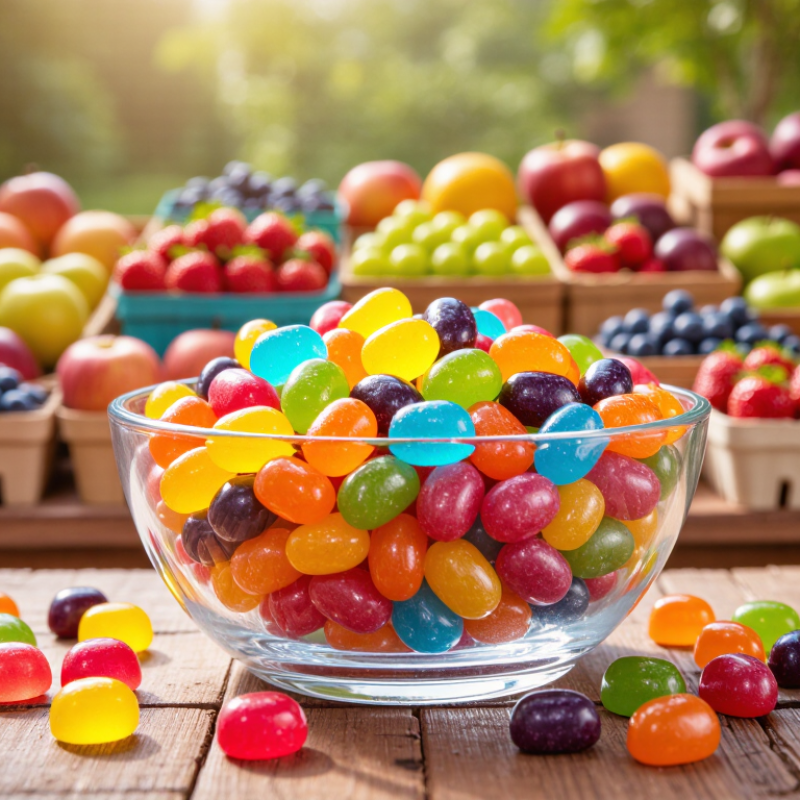
Farmstand fruit jelly beans are bite-sized candies with a chewy center and a crisp, glossy shell. Their flavors may suggest strawberries, peaches, apples, or other market fruit. The name describes a farm-inspired style, though it does not guarantee that the candy contains fruit grown at a farmstand. That distinction matters. A recipe might use fruit juice, puree, or concentrate, while another relies mainly on flavorings. The ingredient list offers a clearer picture than the name alone.

In a typical process, candy makers cook sugar syrup and form the soft centers in small molds. The centers rest until firm enough to handle. Then they tumble in rotating pans while thin layers of syrup build the shell. Color and fruit ingredients or flavorings may be added at different stages, depending on the recipe. The finished beans are dried and sorted for size and appearance. For sourcing, check whether the ingredients name specific fruit forms, and ask how flavor consistency is tested between batches. A peach note can lean toward ripe fruit, or drift into jam-like sweetness. Even careful production does not make every batch taste perfectly fresh.

Where to Find Farmstand Fruit Jelly Bean Producers in 2026

How to Source Farmstand Fruit Jelly Beans in 2026?

Finding producers in 2026 means looking beyond farmstand shelves. Search state agriculture directories, farmers’ market vendor lists, regional food hubs, and small-batch confectionery kitchens. Ask growers who turns their fruit into shelf-stable ingredients; processors often know nearby candy makers. The USDA’s 2022 Census of Agriculture counted 116,617 farms selling directly to consumers, with $3.3 billion in sales. That figure shows a substantial direct-market network, but it does not identify jelly bean producers. Treat it as context, not a supplier list.

Ask potential makers where their fruit comes from, whether they produce seasonally, and what minimum order they accept. Request ingredient specifications, allergen controls, batch records, and shelf-life information before discussing a launch date. Ask for a sample made with the same fruit and process proposed for production. Small makers may offer traceable local fruit but have limited capacity; larger regional kitchens may handle repeat orders more reliably. A directory can be stale, and some calls will go nowhere. That is part of the search. Compare written quotes, lead times, and fruit-sourcing details, then confirm the production site and contact person directly before sending deposits or final artwork.

How to Evaluate Ingredients, Fruit Sources, and Production Methods

How to Source Farmstand Fruit Jelly Beans in 2026?
How to Evaluate Ingredients, Fruit Sources, and Production Methods

When sourcing farmstand-style fruit jelly beans, treat “farmstand” as a flavor cue, not proof of local fruit. Read the ingredient list and ask whether fruit appears as juice, puree, concentrate, or flavoring. These forms affect color, acidity, and taste. A bright berry note may come from concentrate, while delicate peach flavor can fade during cooking. Request a sample from the current batch, not an older display jar. Small differences matter.

Ask suppliers to identify fruit varieties, growing regions, harvest windows, and any blending across farms. A clear answer is useful; a vague “seasonal fruit” claim is not enough. Check whether the ingredient statement names the fruit and whether added colors or acids are used. Then ask how the centers are cooked, deposited, and cured. Gentle cooking may preserve aroma, but the finished candy still needs consistent moisture and texture. Review batch records or a product specification, and compare samples after a few weeks in sealed packaging. Shelf behavior can surprise you.

Tips: Taste at room temperature. Note sweetness, fruit aroma, chew, and any sticky coating. Ask for allergen-handling details and storage guidance in writing. Keep one sample sealed for comparison. It is easy to overvalue attractive packaging; I have done that before. A second tasting with plain water nearby can help reset the palate.

How to Source Farmstand Fruit Jelly Beans in 2026? - How to Evaluate Ingredients, Fruit Sources, and Production Methods

Evaluation area What to evaluate Useful evidence to request Positive sourcing signal Potential concern
Fruit identity Identify whether the fruit character comes from juice, puree, concentrate, dried fruit, flavoring, or a combination. Full ingredient declaration, ingredient specifications, and the supplier’s description of each fruit-derived ingredient. Fruit ingredients are clearly named and their role in the recipe is explained. Fruit imagery or flavor names are treated as proof of substantial fruit content.
Fruit source and seasonality Check the fruit’s growing region, harvest season, supplier chain, and whether sourcing changes during the year. Supplier declarations, origin records, lot documentation, and a written policy for seasonal substitutions. Origin is traceable by ingredient lot, with substitutions disclosed before production. A broad “local” or “farmstand” description without a defined origin or supporting records.
Fruit content and claims Distinguish a fruit-flavored confection from one containing a measurable amount of fruit ingredients. Formula-level ingredient quantities, label review, and substantiation for front-of-pack claims. Claims accurately describe the ingredient and are supported by the formula and applicable labeling rules. A fruit name or picture implies whole-fruit content that the ingredient list does not support.
Juice, puree, and concentrate Review processing form, concentration, storage needs, and how the ingredient affects flavor, color, and texture. Product specification, ingredient statement, handling requirements, and lot-specific certificate of analysis where appropriate. The chosen form is suitable for the candy process and is consistently documented. Assuming concentrate, puree, or juice automatically means a particular fruit percentage or nutritional benefit.
Sweeteners and base ingredients Check the sugar and syrup system, starch or other setting agents, acids, and any glazing ingredients. Complete formula or ingredient statement, ingredient specifications, and allergen or cross-contact information. Ingredients and processing aids are disclosed as required, with clear specifications for restricted dietary needs. A “fruit-forward” description distracts from a confectionery base that is primarily sugars and syrups.
Flavor and color Determine whether flavor and color come from fruit ingredients, added flavors, permitted color additives, or a blend. Ingredient declarations, color-additive documentation where applicable, and sensory samples from representative lots. The source of flavor and color is described accurately and remains consistent across lots. “Natural” or “fruit-colored” is used without checking the applicable labeling definition and ingredient basis.
Farm and food-safety controls Assess produce handling, supplier approval, sanitation, traceability, and the controls used to manage relevant food-safety hazards. Food-safety program summary, supplier verification records, traceability procedure, and audit or inspection documentation when available. The supplier can trace ingredients to lots and explain applicable preventive controls and handling practices. Reliance on informal assurances without records, lot identification, or a defined recall process.
Production method Ask how the candy is cooked, deposited or molded, dried, polished, and coated; confirm where fruit ingredients enter the process. Process-flow description, batch records, equipment and sanitation controls, and a sample from a production-scale run. The process is repeatable and the supplier explains how heat and moisture are managed for the selected fruit ingredients. A small test batch is treated as proof of commercial-scale consistency or shelf stability.
Consistency and quality testing Agree on measurable specifications for size, texture, flavor, appearance, and acceptable lot variation. Written product specification, sampling plan, batch-release checks, and retained samples or complaint records. Acceptance criteria are agreed before purchase and checked for each production lot. Quality is assessed only by a single sample or subjective descriptions such as “farm-fresh taste.”
Shelf life and packaging Verify packaging protection, storage instructions, shelf-life basis, and sensitivity to heat or moisture during distribution. Shelf-life study or supporting rationale, packaging specification, storage conditions, and date-coding procedure. Shelf life is supported by product and packaging data under stated storage conditions. An assumed shelf life is applied without considering fruit ingredients, packaging, and distribution conditions.
Organic or other certification claims Confirm the exact claim, which ingredients and operations it covers, and whether certification is required for the intended market. Current certificate, certified-product scope, chain-of-custody records, and label approval where relevant. The claim matches current documentation and applicable certification and labeling rules. A supplier’s general farm practices are presented as equivalent to a regulated certification.
2026 sourcing decision Compare ingredient transparency, traceability, food-safety documentation, production capability, cost, and seasonal availability. A documented supplier questionnaire, approved sample, written specification, and purchase terms covering substitutions and quality issues. Supplier selection is based on verifiable records and a successful production-scale evaluation, not marketing language alone. Price or “local” positioning is prioritized before confirming ingredient identity, compliance, and repeatability.

Note: “Farmstand fruit jelly beans” is used here as a descriptive sourcing concept. Confirm product claims, ingredient declarations, and market-specific food requirements with qualified regulatory and food-safety professionals.

How to Compare Suppliers, Prices, and Minimum Order Requirements

When sourcing farmstand fruit jelly beans in 2026, compare suppliers using the same checklist. Ask for a current price per case, case quantity, minimum order, and shipping estimate. A low unit price can look less attractive after freight or special packaging fees. Check whether the quote covers mixed fruit flavors or requires a full case of each flavor. Details matter.

Request a sample before placing a larger order. Look at bean size, color consistency, texture, and how clearly the fruit flavors come through. Ask when the product was made and how long it typically keeps when stored as directed. Supplier documentation should identify ingredients, allergens, packaging, and storage guidance. Keep the answers with each quote. It helps.

Minimum order requirements can vary by flavor, packaging format, and production schedule. Compare the smallest practical order, not just the lowest advertised price. For example, a supplier may offer a lower rate at 20 cases, but that quantity could tie up cash and storage space. Ask whether smaller trial orders are available and whether repeat orders use the same pricing. The comparison is not perfectly tidy; shipping dates and seasonal fruit inputs can shift. Record what each supplier confirms, and revisit any estimate that seems unusually vague.

How to Place an Order and Verify Delivery and Product Quality

Before placing a 2026 order, ask the seller to confirm the fruit flavors, bean size, color range, ingredient list, allergen statement, and pack weight in writing. Request a current specification sheet and, if available, a sample from the same production lot. Samples can differ from a later shipment. That detail is easy to miss.

Agree on the quantity, price, dispatch date, delivery window, and packaging before payment. Ask how the beans will be protected from heat, moisture, and crushing during transit. Get the order confirmation and tracking details by email. If a delivery date matters for an event, leave extra time; estimates can slip, and I would not treat them as guarantees.

When the cartons arrive, photograph the sealed boxes before opening them. Check the product name, lot code, best-before date, and quantity against the order documents. Look for torn inner bags, dampness, unusual clumping, or crushed beans. Keep a few unopened packs and note any mismatch promptly. If the texture or fruit aroma seems off, avoid guessing; compare it with the sample and ask the seller for written guidance. A neat label helps, but it does not prove the contents match.

How to Source Farmstand Fruit Jelly Beans in 2026: Order & Delivery Quality Checks

Use this checklist when requesting a quote, confirming an order, and inspecting delivery. Bars count recommended verification steps, not supplier ratings or measured industry results. Confirm product specifications, ingredients and allergens, batch identification, delivery documents, and package condition before accepting a shipment.

FAQS

Where can I find farmstand fruit jelly bean producers in 2026?

Search state agriculture directories, farmers’ market vendor lists, regional food hubs, and small-batch confectionery kitchens. Some listings may be outdated.

How can I find makers using local fruit?

Ask growers who processes their fruit into shelf-stable ingredients. Nearby processors may know small candy makers.

What should I ask a potential producer?

Ask about fruit sources, seasonal production, minimum orders, ingredients, allergens, batch records, and shelf life. Get answers in writing.

Should I request a sample before ordering?

Yes. Request a sample made with the same fruit and process planned for production. Check its size, color, texture, and fruit flavor.

How do I compare supplier prices?

Compare price per case, case quantity, minimum order, and shipping estimates. Check for extra packaging fees. Details matter.

Why compare the smallest practical order?

A lower price may require a larger order, such as 20 cases. That can tie up cash and storage space.

What should I check about flavors and packaging?

Ask whether mixed flavors are available or each flavor requires a full case. Confirm which packaging and storage details appear in the supplier documents.

How can I verify a producer before paying?

Confirm the production site and contact person directly. Compare written quotes and lead times before sending deposits or final artwork. Some calls go nowhere.

Can prices and schedules change?

Yes. Seasonal fruit inputs and shipping dates can shift. Recheck vague estimates; the comparison may not be perfectly tidy.

Conclusion

Farmstand Fruit Jelly Beans are fruit-inspired candies that can be made by blending fruit flavors or ingredients with a chewy jelly base, then shaping and coating the pieces. In 2026, buyers can look for producers through local food markets, confectionery trade events, regional food directories, and direct inquiries to small-scale candy makers. Before choosing a supplier, ask what fruits are used, where they come from, whether flavors are natural or added, and how the candies are produced and stored.

Compare suppliers by reviewing ingredient lists, sample quality, pricing, minimum order quantities, packaging options, and estimated lead times. Request written details about freshness and shipping conditions, especially for larger orders. Once you select a producer, confirm the order specifications, delivery schedule, and product handling instructions. Check the shipment promptly for packaging condition, consistency, flavor, and freshness, and contact the supplier if anything differs from the agreed requirements.

Emma

Emma

Emma is a seasoned marketing professional with a deep expertise in our company's product offerings. With a keen eye for detail and a passion for effective communication, she frequently updates our website with insightful blog articles that not only highlight the benefits and features of our......